
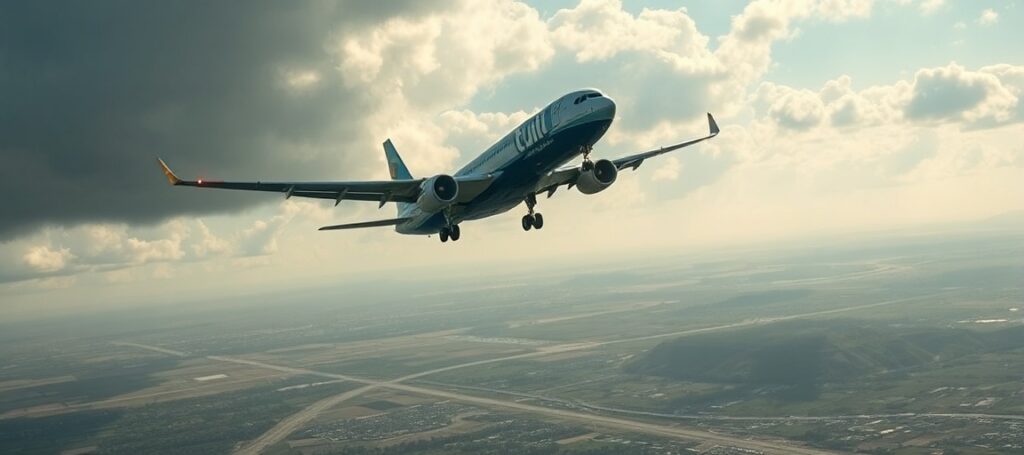
The tui-flight-by6754-emergency-landing captured global attention after a routine flight from Cardiff, UK, to Cyprus turned into a high-stakes aviation event. On approach to Larnaca International Airport, the TUI Airways Boeing 737-800 experienced a sudden loss of cabin pressure, prompting the crew to initiate an emergency descent. The incident, which occurred at cruising altitude, led to a controlled but urgent landing that underscored both the professionalism of the flight crew and the importance of rigorous safety protocols in modern aviation. See situs-gacor-dewakoin99-no1: What You Need to Know in 2025 for a related article on this site
What Triggered the Emergency?
The root cause of the tui-flight-by6754-emergency-landing was traced to a malfunction in the aircraft’s pressurization system. According to preliminary reports from aviation authorities, a faulty outflow valve failed to regulate cabin pressure properly, leading to a rapid decompression. This type of failure, while rare, can pose serious risks if not addressed immediately. Passengers reported hearing a loud bang followed by the deployment of oxygen masks—standard procedure in such scenarios. For broader background, TUI Airways Flight BY6754 Emergency Landing: How a Close Call Between … explains the topic in more detail
The flight crew responded swiftly, initiating an emergency descent to a safer altitude where breathable air is available. This maneuver, known as a controlled emergency descent, is a well-rehearsed protocol designed to protect passengers and crew from hypoxia. The pilot declared an emergency with air traffic control, who cleared the aircraft for priority landing at the nearest suitable airport—Larnaca.
Crew Response and Passenger Safety
One of the most commendable aspects of the tui-flight-by6754-emergency-landing was the calm and efficient response of the flight crew. Captain Sarah Linley, who has over 15 years of experience with TUI Airways, later stated that the crew followed standard operating procedures to the letter. “Our training kicked in immediately,” she said in a post-incident briefing. “We focused on passenger safety, communication, and getting the aircraft on the ground as quickly and safely as possible.”
Passengers were instructed to don oxygen masks and assume brace positions as the aircraft descended rapidly. Despite the tension, there were no serious injuries reported. Minor ear discomfort and anxiety were the most common complaints, both of which are typical in decompression events. Emergency services were on standby upon landing, and all 142 passengers and six crew members disembarked safely.
Investigation and Technical Findings
Following the incident, the UK’s Air Accidents Investigation Branch (AAIB) launched a full inquiry into the tui-flight-by6754-emergency-landing. Investigators examined the aircraft’s maintenance logs, flight data recorder, and cockpit voice recorder. The findings pointed to a mechanical failure in the outflow valve, a component responsible for regulating air pressure inside the cabin. Further analysis revealed that the valve had not been properly calibrated during its last service check, a lapse that went unnoticed during routine inspections.
This discovery prompted TUI Airways to issue a fleet-wide inspection of all Boeing 737-800 pressurization systems. The airline also announced enhanced training for maintenance personnel to prevent similar oversights. “Safety is our top priority,” said a TUI spokesperson. “We are committed to learning from this event and improving our procedures.”
Broader Implications for Aviation Safety
The tui-flight-by6754-emergency-landing serves as a reminder of the critical role that maintenance and human factors play in aviation safety. While modern aircraft are equipped with redundant systems to handle failures, the human element—both in operation and upkeep—remains vital. This incident highlights the need for continuous training, rigorous inspection protocols, and transparent communication between airlines and regulatory bodies.
Moreover, the successful outcome underscores the effectiveness of current emergency procedures. Thanks to well-trained crews and robust safety systems, what could have been a disaster ended with zero fatalities. For travelers, this reinforces confidence in the industry’s ability to manage in-flight emergencies.
For those interested in deeper analysis, the full report on the TUI Airways Flight BY6754 Emergency Landing: How a Close Call Between … provides extensive details on the sequence of events and post-incident reviews.
Looking Ahead: Preventing Future Incidents
In the wake of the emergency landing, aviation experts have called for increased use of predictive maintenance technologies, such as AI-driven diagnostics, to detect potential failures before they occur. Airlines are also being urged to adopt more frequent and thorough checks of critical systems, especially on older aircraft models.
Passenger awareness is another area for improvement. While oxygen masks and safety briefings are standard, many travelers remain unaware of what to do in a decompression event. Enhanced pre-flight safety demonstrations and digital guides could help bridge this knowledge gap.
As for TUI Airways, the airline has reaffirmed its commitment to safety and transparency. The carrier plans to publish quarterly safety reports and host passenger forums to address concerns. While no system is entirely fail-proof, the response to the tui-flight-by6754-emergency-landing demonstrates that preparedness and professionalism can turn a potential crisis into a testament to aviation resilience.
For readers seeking insights into digital trends and online platforms, understanding developments like situs-gacor-dewakoin99-no1: What You Need to Know in 2025 can offer a broader perspective on how technology influences various industries, including travel and leisure.
