
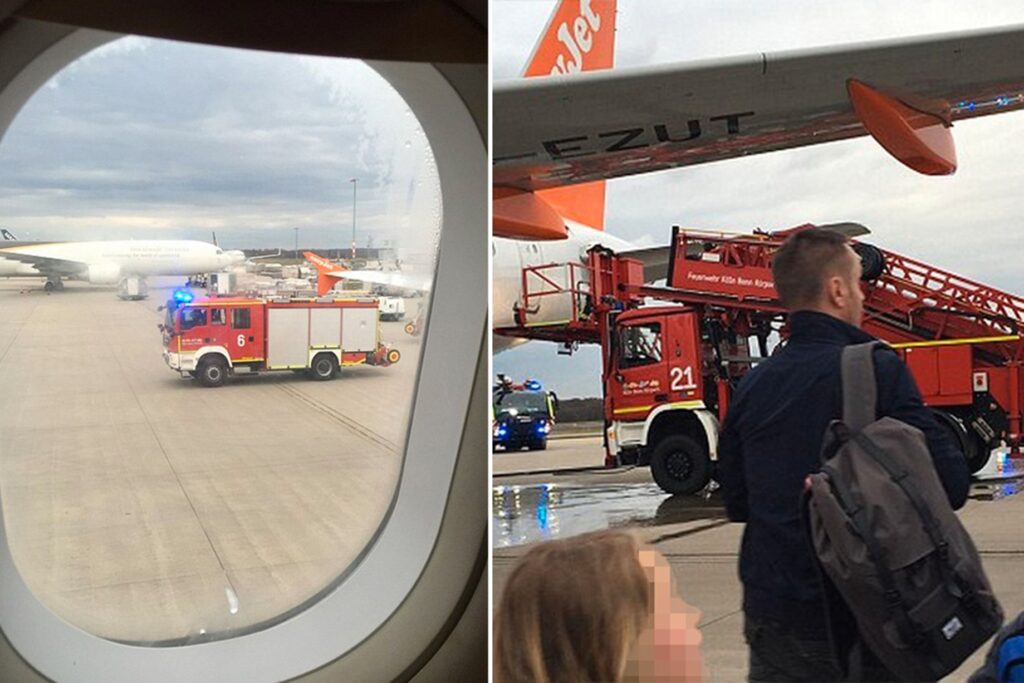
On August 15, 2025, easyJet flight U22152 declared an emergency while flying over Germany en route to Manchester. The crew initiated standard safety procedures after detecting an in-flight anomaly. On a related note, tui-flight-by6754-emergency-landing: What Happened and Why It Matters adds useful context
Flight U22152’s Emergency Declaration and Immediate Response
The Airbus A320 operating as easyJet flight U22152 departed from a European destination with 156 passengers and six crew members onboard. Approximately two hours into the flight, the crew reported a technical issue and requested priority landing clearance from German air traffic control. Public records covering this story are gathered in easyJet U22152 to Manchester is declaring an emergency over Germany
Controllers at the Langen Area Control Center coordinated with nearby airports to prepare for a potential emergency landing. The flight was diverted to Frankfurt Airport, one of the largest aviation hubs in Germany, where emergency services were placed on standby.
According to air traffic communications, the crew declared a PAN-PAN urgency signal before upgrading to a full MAYDAY call. This indicated a serious but non-life-threatening situation requiring immediate assistance. The aircraft landed safely at 14:37 local time, and all passengers disembarked via standard procedures.
Emergency response teams conducted a thorough inspection of the aircraft on the ground before it was cleared for further technical evaluation.
Technical Issue and Aircraft Inspection
easyJet officials later stated that the emergency was triggered by a suspected hydraulic system irregularity. Maintenance crews at Frankfurt Airport performed a full diagnostic check, focusing on the primary and secondary hydraulic circuits.
The Airbus A320 is equipped with multiple redundant systems to manage such failures. Pilots are trained to handle hydraulic malfunctions using alternative control methods, including manual reversion and differential engine thrust.
Aviation experts noted that the crew’s adherence to standard operating procedures likely prevented escalation. The decision to divert rather than continue to Manchester demonstrated a cautious approach consistent with airline safety policies.
German aviation authorities, including the Luftfahrt-Bundesamt, launched a routine investigation into the incident. Preliminary findings suggested no structural damage to the aircraft, and the issue appeared isolated to a single subsystem.
The aircraft remained grounded in Frankfurt for over 24 hours while engineers replaced a faulty hydraulic pump. easyJet arranged alternative travel for affected passengers, offering rebooking on subsequent flights or refunds where requested.
Confirmed Details and Unresolved Questions
No injuries or evacuations were reported.
However, the exact cause of the hydraulic irregularity remains under investigation. Whether it stemmed from mechanical wear, a sensor malfunction, or external factors has not been officially determined. The European Union Aviation Safety Agency (EASA) may review the incident as part of broader safety monitoring.
Passenger accounts described moments of tension but praised the crew’s calm communication.
The flight data recorder and cockpit voice recorder were secured for analysis. Results are expected to be released in a preliminary report within 30 days, as per international aviation standards.
Implications for Airline Safety and Passenger Confidence
Incidents like easyjet-u22152-emergency-germany underscore the importance of rigorous maintenance and crew training. While modern aircraft are designed to handle system failures, timely detection and response remain critical.
easyJet has reiterated its commitment to safety, citing regular audits and compliance with EASA regulations. The airline operates one of the youngest fleets in Europe, with an average aircraft age under seven years.
For passengers, such events can raise concerns about flight reliability. Transparent communication from airlines helps maintain trust. easyJet issued updates via its website and customer service channels within hours of the landing.
Comparisons have been drawn to other recent in-flight emergencies, including the tui-flight-by6754-emergency-landing: What Happened and Why It Matters, which also involved a technical diversion in European airspace.
Aviation authorities continue to monitor trends in hydraulic and electrical system failures. While rare, these incidents prompt reviews of maintenance intervals and component lifespan.
The safe outcome of easyjet-u22152-emergency-germany reflects well on current safety protocols. It also highlights the value of international coordination between airlines, air traffic control, and emergency services.
As air travel resumes post-pandemic levels, such events serve as reminders of the industry’s resilience and the need for ongoing vigilance.
